
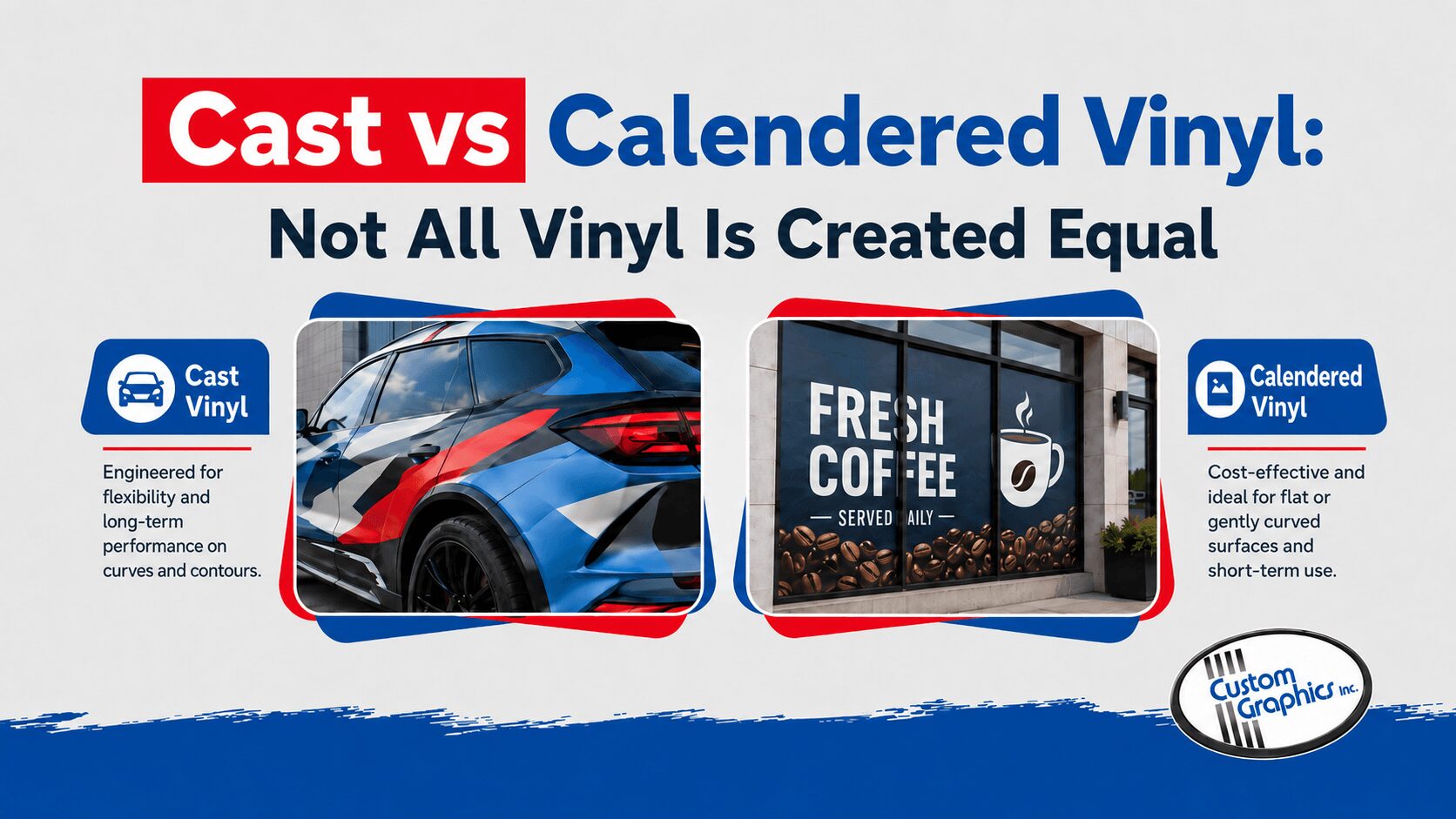
When comparing cast vs calendered vinyl, it is important to understand that each material is designed for different applications. While design, colors, and messaging often receive the most attention, the type of vinyl you choose has a major impact on durability, appearance, and long-term performance.
Whether you’re investing in a vehicle wrap, storefront graphics, wall decals, or outdoor signage, selecting the right vinyl helps protect your investment and ensures your graphics perform as expected. Understanding the differences between cast vs calendered vinyl can help you confidently choose the right material based on your application, budget, and long-term performance goals.
What Is Cast Vinyl?
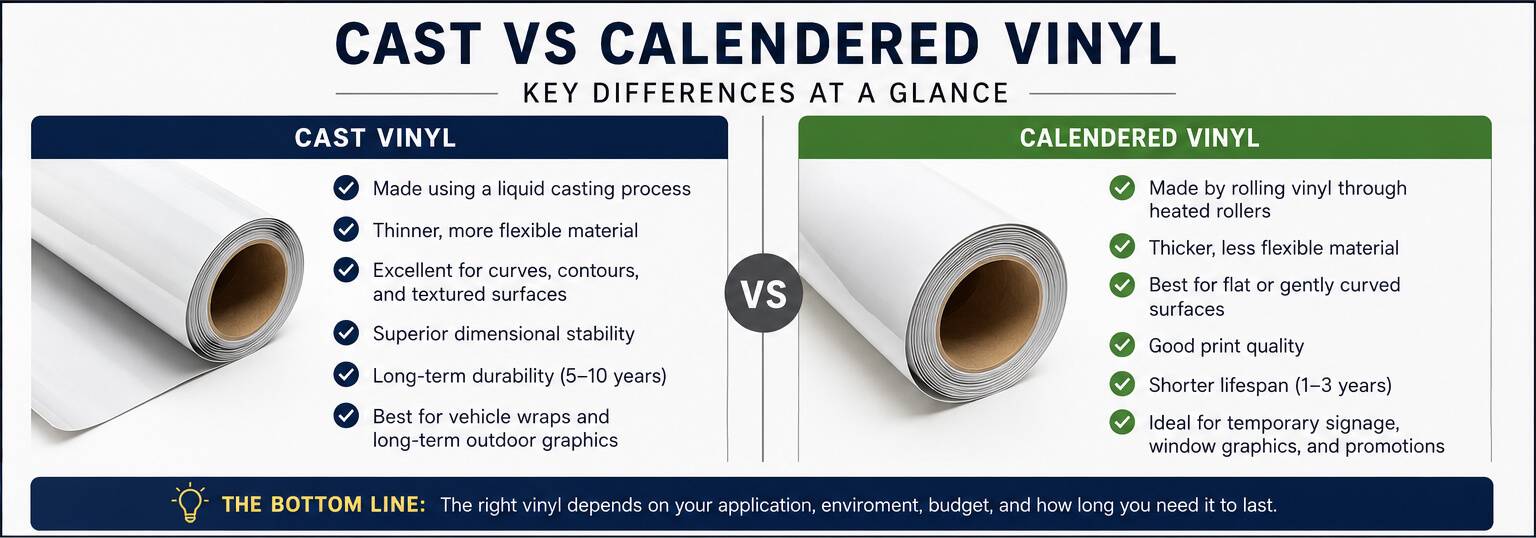
Cast vinyl is manufactured using a liquid casting process. The vinyl begins as a liquid that is poured onto a casting sheet and cured slowly in a controlled environment. This process creates a thinner, more flexible material with excellent dimensional stability.
Because cast vinyl conforms easily to curves, rivets, corrugations, and other complex surfaces, it has become the industry standard for vehicle wraps, fleet graphics, and many long-term exterior signage applications.
Its flexibility allows installers to stretch and shape the material without compromising its appearance or long-term performance.
Why Cast Vinyl Is the Preferred Choice for Vehicle Wraps
One of the biggest differences when comparing cast vs calendered vinyl is long-term durability. Cast vinyl offers superior performance in demanding applications where longevity and flexibility are essential.
High-quality cast vinyl resists shrinking, cracking, fading, and lifting much better than lower-cost alternatives. Under normal conditions, it can last anywhere from five to ten years depending on the environment, maintenance, and the specific product being used.
Because it maintains its original shape over time, cast vinyl is ideal for full vehicle wraps, trailers, box trucks, and other projects where graphics need to conform smoothly to complex vehicle surfaces.
For businesses investing in mobile advertising, choosing the right material helps ensure the wrap continues looking professional for years.
What Is Calendered Vinyl?
Calendered vinyl is produced differently. Instead of being cast as a liquid, heated vinyl is rolled through a series of large rollers until it reaches the desired thickness.
This manufacturing process is faster and more economical, making calendered vinyl a popular option for projects with tighter budgets or shorter lifespans.
While calendered vinyl provides excellent print quality, it is generally thicker and less flexible than cast vinyl. The rolling process also introduces internal stress into the material, which can lead to gradual shrinkage as the vinyl ages.
For many applications, however, this is not a concern.
Where Calendered Vinyl Performs Best
Calendered vinyl works exceptionally well on flat or gently curved surfaces.
It is commonly used for window graphics, wall graphics, promotional decals, temporary signage, yard signs, and many interior branding projects. Businesses that regularly update seasonal promotions often choose calendered vinyl because it offers a cost-effective solution without sacrificing visual appeal.
When installed on the right surface and used for the appropriate length of time, calendered vinyl delivers outstanding value.
While cast vs calendered vinyl is often viewed as a choice between premium and budget-friendly materials, the better option always depends on the application, not the price. Choosing the right vinyl for the job is more important than simply selecting the least expensive option.
Comparing Cast vs Calendered Vinyl
When comparing cast vs calendered vinyl, it helps to evaluate how each material performs in different applications. While both produce excellent graphics, they are designed for different purposes.
Cast vinyl offers greater flexibility, making it ideal for complex curves, vehicle wraps, and textured surfaces. It also provides superior dimensional stability, allowing graphics to maintain their shape over many years of outdoor exposure.
Calendered vinyl, on the other hand, is designed for flatter applications where extreme flexibility is not required. While it generally has a shorter lifespan than cast vinyl, it remains an excellent option for temporary graphics and many everyday signage projects.
The best material is simply the one that matches your application and long-term goals. If you’re interested in learning more about how these materials differ, this overview of cast and calendered vinyl explains how each manufacturing process affects flexibility, durability, and long-term performance.
Choosing the Right Vinyl for Your Project
Choosing between both materials begins with understanding how and where your graphics will be used. The intended application should always guide material selection.
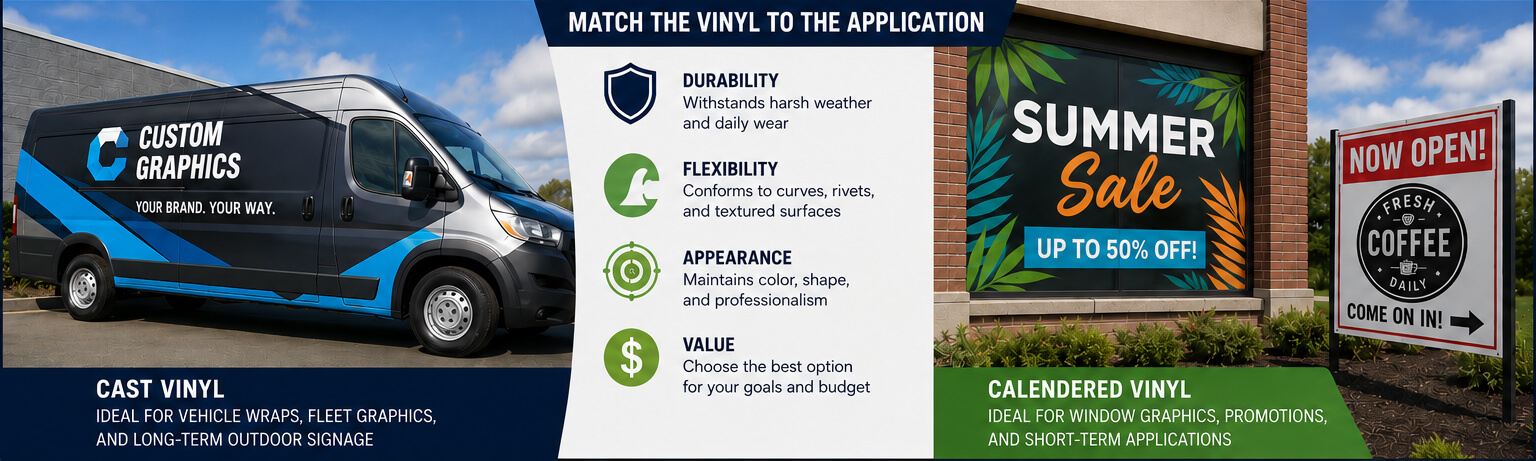
If you are wrapping a vehicle, installing long-term exterior signage, or applying graphics to textured or heavily contoured surfaces, cast vinyl is almost always the better investment.
If your project involves window decals, promotional graphics, interior branding, or temporary signage, calendered vinyl may provide everything you need while helping control costs.
Considering factors such as expected lifespan, installation surface, budget, and long-term goals makes it easier to compare cast vs calendered vinyl and select the right material before production begins.
Climate Makes a Difference
Climate has a significant impact on vinyl performance, especially when choosing the right material for graphics that will remain outdoors year-round.
Businesses in regions like North Dakota experience intense sunlight, freezing winters, wide temperature swings, road salt, snow, and strong winds throughout the year. These conditions place additional stress on exterior graphics.
Cast vinyl performs exceptionally well in demanding climates because it resists shrinking and maintains strong adhesion over time. This makes it a smart choice for long-term vehicle wraps and outdoor signage that needs to withstand changing weather conditions.
Calendered vinyl can still perform very well outdoors, but it is generally better suited for shorter-term installations or projects where long-term exposure is less of a concern.
Professional Installation Protects Your Investment
Regardless of whether you choose cast vs calendered vinyl, professional installation is essential for achieving long-lasting results.
Professional installation begins with proper surface preparation to ensure maximum adhesion. Installers must also account for temperature, stretching limits, seam placement, and the contours of the application surface.
On vehicle wraps, improper installation can lead to bubbling, lifting edges, wrinkles, or premature failure. Experienced installers understand how different vinyl types behave during installation and use techniques that maximize both appearance and longevity.
Choosing the right installer is just as important as choosing the right material.
Proper Maintenance Extends Vinyl Life
Regular maintenance helps both cast and calendered vinyl perform at their best.
Routine washing removes dirt, road salt, and contaminants that can affect appearance over time. Using approved cleaning products and avoiding abrasive brushes or harsh chemicals helps preserve color, gloss, and adhesion.
For vehicle wraps, hand washing is generally recommended whenever possible. Parking in shaded areas or inside a garage when practical can also reduce prolonged UV exposure and help extend the life of the graphics.
A little routine maintenance goes a long way toward preserving appearance, extending the life of your graphics, and protecting your investment, regardless of which vinyl you choose.
Choosing the Right Vinyl Starts with the Right Partner
Every signage project has unique requirements, which is why selecting the right vinyl depends on your application, expected lifespan, environment, and budget. At Custom Graphics, we help businesses evaluate these factors and recommend materials that deliver the best balance of performance, durability, and value.
Choosing the correct vinyl from the beginning helps prevent unnecessary repairs, extends the life of your graphics, and ensures your finished project looks great for years to come.
If you’re planning a signage or vehicle wrap project, contact Custom Graphics today. We’ll help you choose the right vinyl for your application, budget, and long-term goals.