
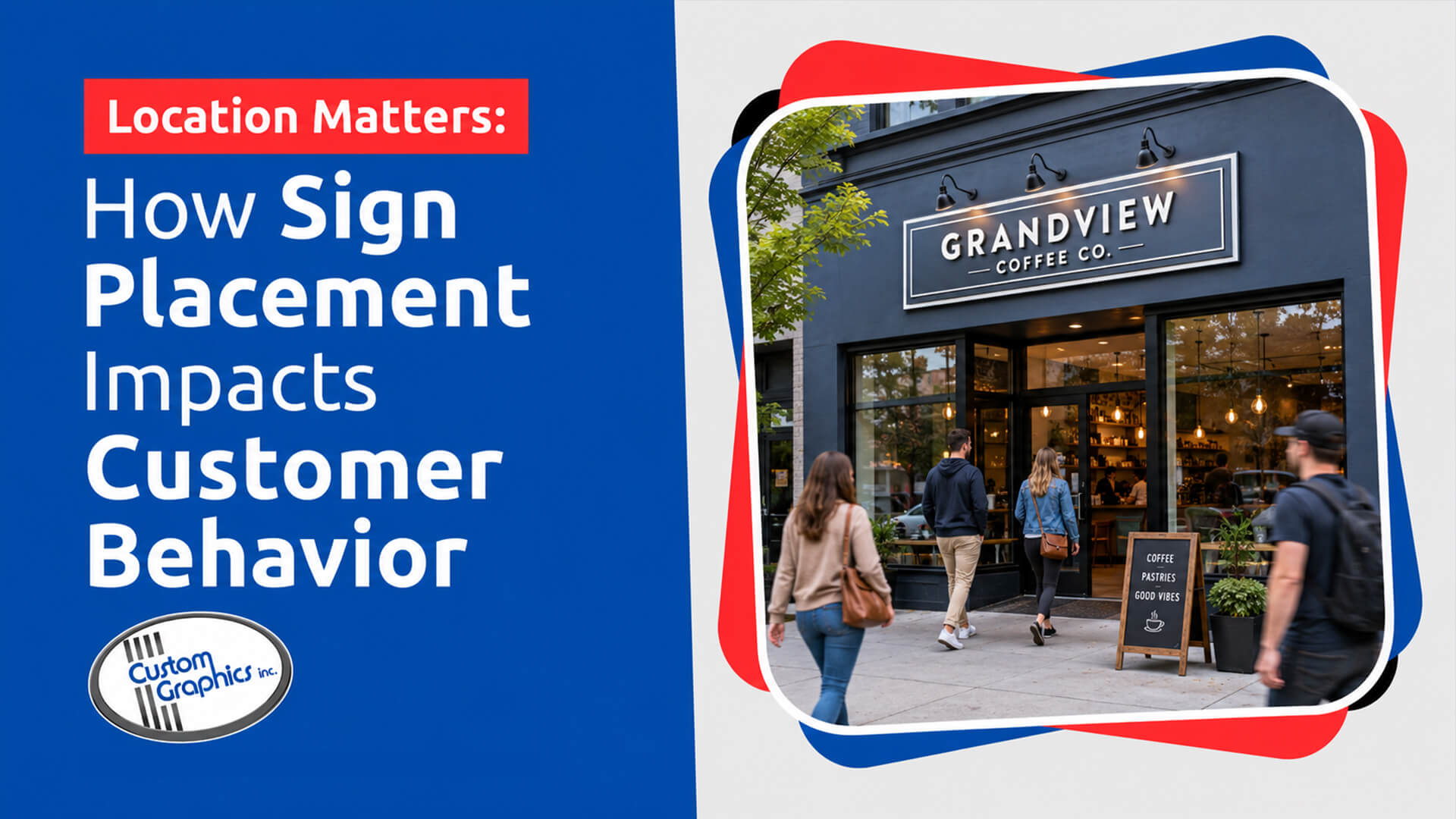
Sign placement is one of the most overlooked parts of effective visual marketing. Many businesses invest heavily in high-quality signage but give far less attention to where that signage will actually be seen. Even the best-designed sign can under-perform if it is not positioned strategically.
Proper sign placement improves visibility, strengthens brand recognition, and directly influences how customers interact with a business. When signage is placed intentionally, it becomes a tool that guides attention, supports decision-making, and improves the overall customer experience.
Traffic Flow Impacts Visibility
One of the first factors to consider when planning sign placement is how customers approach your location.
Exterior signage should be visible from the primary directions drivers and pedestrians travel. People need enough time to notice the sign, process the message, and react safely. If signage appears too late or is blocked by landscaping, parked vehicles, or nearby structures, it can easily be missed.
Understanding local traffic patterns, speed limits, and intersection layouts helps businesses position signage where it will have the greatest impact. Signs placed with traffic flow in mind are more likely to capture attention before customers pass by.
Viewing Distance Affects Readability
The distance between the viewer and the sign plays a major role in how effective the signage will be.
Larger signs are often necessary along busy roads or highways where drivers need to read information quickly from farther away. In pedestrian-heavy areas, smaller signs can still perform well because viewers are much closer to the message.
Letter size and spacing should always match the expected viewing distance. If customers struggle to read the sign while approaching, the opportunity to engage them may already be lost. The International Sign Association’s guide on sign design and placement offers a helpful breakdown of the readability factors (including typography, lighting, and color) that influence how quickly viewers can process a sign.
Height and Angle Influence Attention
Where a sign is mounted can dramatically affect how noticeable it is.
Signs installed too low may become blocked by vehicles, outdoor furniture, or crowds. Signs placed too high may fall outside natural sight-lines and require viewers to look up too far to read comfortably.
The most effective placement keeps signage within a natural viewing range while remaining easy to spot from a distance. Angling signs toward approaching traffic can also improve readability and increase exposure.
Lighting Conditions Change Sign Performance
A sign that looks great during the day may become difficult to see at night if lighting is not considered during installation.
Shadows from nearby buildings, awnings, or trees can reduce visibility throughout different times of day. Exterior lighting, illuminated signage, and reflective materials help maintain readability in lower-light conditions and extend visibility after business hours.
Businesses that rely on evening traffic especially benefit from signage that remains clear and visible after sunset.

Interior Sign Placement Shapes Customer Experience
Sign placement inside a building is just as important as exterior visibility.
Wayfinding signs should appear before decision points such as hallway intersections, elevators, staircases, and checkout areas. When signage appears too late, customers can become confused or frustrated trying to navigate the space.
Strategically placed interior signage improves traffic flow, reduces unnecessary questions, and creates a more comfortable customer experience.
Placement Influences Professional Appearance
Well-positioned signage creates a sense of organization and clarity throughout a space.
Poor placement can make businesses feel cluttered, confusing, or difficult to navigate. In environments such as retail stores, healthcare facilities, and office buildings, visual clarity helps customers feel more comfortable and confident.
Sign placement also affects how polished and professional a brand appears. Consistent positioning and clear visual hierarchy reinforce trust and strengthen first impressions.
Local Regulations Must Be Considered
Sign placement is not only about visibility. It must also comply with local zoning laws and building regulations.
Many municipalities have restrictions related to sign height, lighting, placement, and overall size. Failing to follow these requirements can lead to costly adjustments or permit issues later on.
Working with experienced signage professionals helps businesses stay compliant while still maximizing visibility and effectiveness.
Strategic Sign Placement Supports Business Growth
Effective signage is about more than design alone. Placement plays a major role in whether a sign actually captures attention and influences customer behavior.
At Custom Graphics, we evaluate site conditions, lighting, traffic patterns, and customer flow before recommending placement strategies. Our goal is to ensure every sign performs effectively in real-world conditions.
If you are planning new signage or want to improve the visibility of your current signs, our team is here to help you create a placement strategy that supports your business goals.