
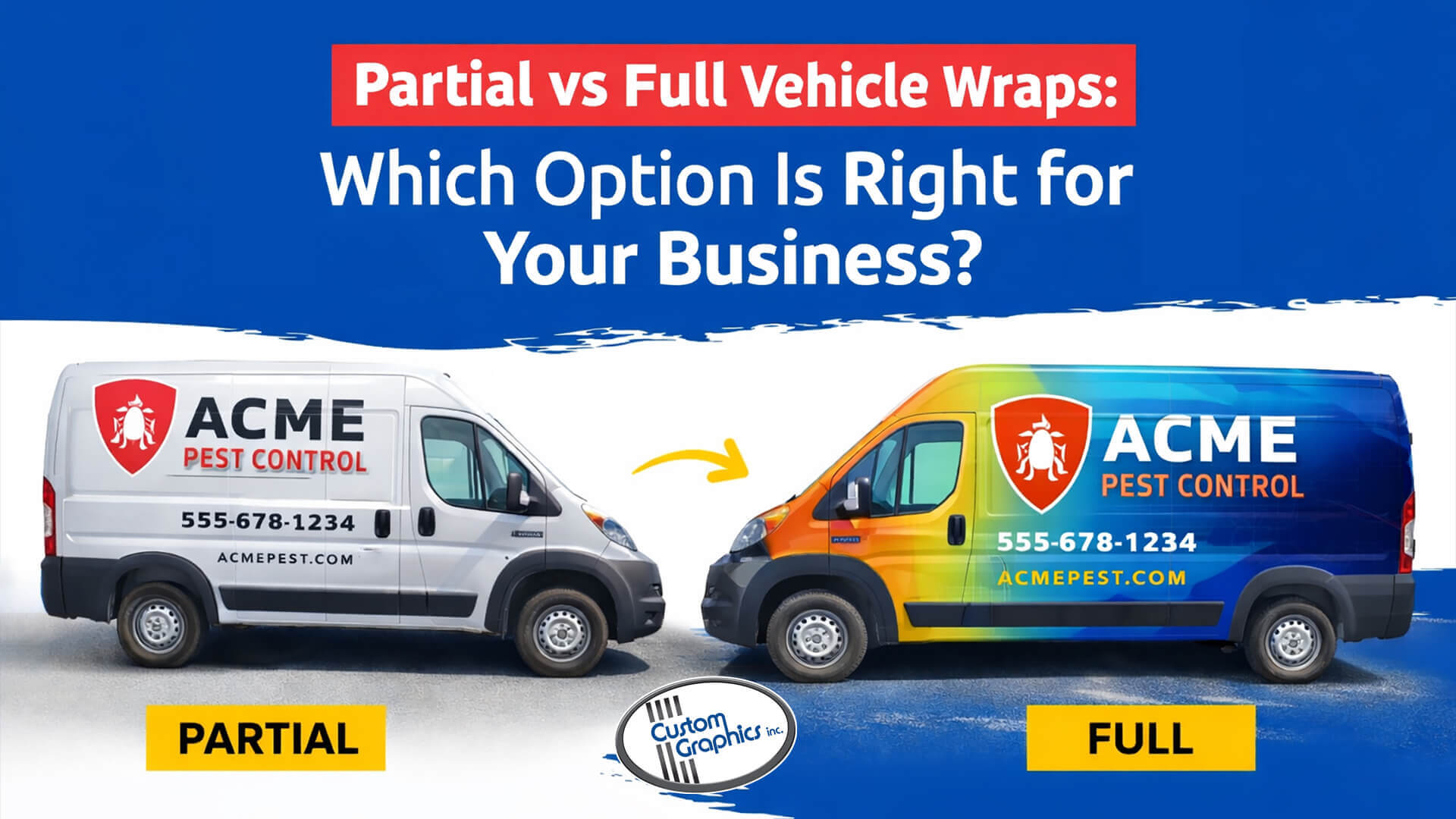
Vehicle wraps have become one of the most effective ways for businesses to advertise on the move. Whether you operate a single service vehicle or an entire fleet, wraps help increase visibility, build brand recognition, and create a more professional appearance on the road. Unlike traditional advertising methods that require ongoing monthly spend, a well-executed vehicle wrap turns everyday driving into a long-term marketing asset.
One of the most common questions businesses ask when exploring this option is how to choose between partial vs full vehicle wraps. Each approach offers unique advantages, and the right choice depends on your goals, budget, and how you plan to use your vehicles as a marketing tool. Understanding the key differences can help you make a more confident and strategic decision.
Full Vehicle Wraps Deliver Maximum Impact

When weighing partial vs full vehicle wraps, full coverage is often the boldest choice. Full vehicle wraps cover nearly the entire exterior surface of a vehicle, including doors, panels, hood, and rear sections. This approach creates a bold, high-impact look that is hard to miss. With full coverage, you have complete creative freedom, designs can include large graphics, detailed imagery, and seamless branding that flows across the entire vehicle without interruption.
This makes full wraps especially effective for businesses that rely on strong visual presence to attract attention. Because the design covers every major surface, your branding is visible from virtually any angle, whether a vehicle is parked, stopped at a light, or moving through traffic. For companies that want to make a strong first impression and maintain consistent brand identity across a fleet, full wraps are often the most powerful option available.
Another advantage when considering partial vs full vehicle wraps is paint protection. The vinyl acts as a barrier against UV exposure, road debris, salt, and minor surface wear. Over time, this protective layer helps preserve the condition of the factory finish, which can support better resale value when the wrap is eventually removed.
Partial Wraps Offer Flexibility and Efficiency

Partial vehicle wraps focus on specific areas of the vehicle, such as the doors, rear panels, or hood, while incorporating the vehicle’s original paint color into the overall design. When executed thoughtfully, a partial wrap can still deliver strong branding and a polished, professional appearance without requiring full coverage.
One of the strengths of a partial wrap is how it uses the existing vehicle color as a design element rather than simply working around it. A skilled designer can integrate the paint color seamlessly into the layout, creating a look that feels intentional and complete. This approach works particularly well for businesses with vehicles in neutral or brand-aligned colors.
Partial wraps are a great fit for businesses that want a meaningful upgrade in appearance without stretching their budget. For those evaluating partial vs full vehicle wraps on a tighter investment, they offer strong long-term advertising value at a lower upfront cost, making them especially attractive for small businesses, startups, or companies wrapping a large number of vehicles at once.
Partial vs Full Vehicle Wraps: What’s the Difference?
The partial vs full vehicle wraps choice comes down to a few key factors:
• Coverage and visibility. Full wraps provide uninterrupted designs that maximize visibility from every angle and tend to stand out more in high-traffic or highway settings. Partial wraps perform well in local driving environments where viewers are closer to the vehicle and have more time to take in the design.
• Budget. Full wraps require more material and installation time, which increases the overall investment. Partial wraps offer a more cost-efficient alternative while still delivering strong, lasting advertising value.
• Vehicle type. Larger vehicles like box trucks, cargo vans, and trailers offer more surface area and often benefit most from full wraps that maximize that space. Smaller vehicles, including sedans and compact SUVs, can achieve effective and attractive branding with a well-executed partial wrap.
• Design approach. Full wraps allow for seamless, cohesive graphics across the entire vehicle, giving designers more room to work with bold concepts and detailed imagery. Partial wraps require a more strategic approach, with careful placement of graphics so they work naturally with the vehicle’s existing color and shape. When done correctly, the result still feels balanced and intentional.
• Longevity and maintenance. Both options offer similar durability when high-quality materials are used. Premium vinyl films are built to withstand outdoor conditions for several years, and regular washing and proper care will extend the life of either wrap. For specific maintenance recommendations, 3M provides helpful guidance on caring for vehicle wraps.
Which Wrap Option Is Right for You?
The decision between partial vs full vehicle wraps ultimately comes down to your goals, how your vehicles are used day to day, and the level of visibility you want to achieve. If maximum impact and bold, seamless branding are the priority, a full wrap is likely the better fit. If you’re looking to create a clean, professional appearance while managing costs or maintaining some flexibility, a partial wrap can deliver excellent results.
It’s also worth thinking about your long-term plans. If you anticipate updating your branding frequently or rotating vehicles within a fleet, a partial wrap may offer more practical flexibility. If you’re investing in a stable, long-term advertising solution that you want to stand out consistently, a full wrap is often worth the additional investment.
At Custom Graphics, we work closely with businesses to evaluate their specific needs and recommend solutions that perform in real-world conditions. From initial design and material selection through professional installation, our goal is to create wraps that look great, hold up over time, and deliver consistent results on the road. If you’re ready to explore partial vs full vehicle wraps for your business, reach out to our team to start the conversation.